You’ve trained for months. Your swimming sessions in the pool are going well. You feel fit, your technique is improving, and you’re confident about your upcoming triathlon.
Then race day arrives.
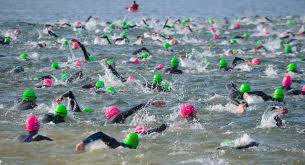
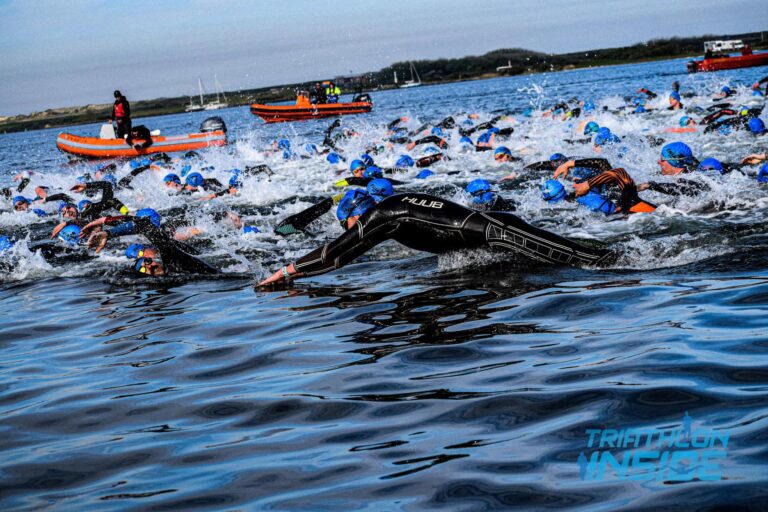
You enter the water. Hundreds of swimmers surround you. Someone bumps into your legs, another swimmer splashes water into your face, and suddenly the space around you feels much smaller than you expected.
Your heart rate shoots up. Your breathing becomes faster and shallower. You try to swim harder, but somehow you can’t seem to catch your breath.
Before you know it, you’re panicking.
Sound familiar?
You’re certainly not alone. Many triathletes experience breathing difficulties, anxiety, or even panic during the opening minutes of an open water swim.
And here’s something important: Being a strong pool swimmer doesn’t automatically mean you’ll feel comfortable swimming in open water.
The good news is that you can improve your breathing, develop confidence, and prepare yourself to handle the challenges of a triathlon swim.
Let’s look at why this happens and, more importantly, what you can do about it.
Why Do You Feel Breathless at the Start of a Triathlon
One of the most common mistakes triathletes make is assuming that feeling breathless means they aren’t fit enough.
In many cases, the problem isn’t your fitness. It’s the combination of excitement, stress, unfamiliar surroundings, and changes in your swimming rhythm.
There are several reasons why the start of an open water swim can feel overwhelming.
Adrenaline and race-day excitement
Your body knows something important is about to happen. Your adrenaline levels rise, your heart rate increases, and your breathing may become faster even before you enter the water.
This is a normal response to stress and excitement.
However, if you start swimming while already breathing rapidly, it becomes much harder to establish a relaxed and controlled breathing rhythm.
Crowded swim starts
In many triathlons, especially larger events, swimmers start together in relatively limited space.
You may experience:
-
Swimmers touching your feet or legs.
-
Unexpected contact with other competitors.
-
Arms and legs moving in every direction.
-
Water splashing into your face.
-
Difficulty maintaining your normal swimming rhythm.
Even experienced swimmers can find this uncomfortable.
When you feel restricted or lose your sense of space, your natural reaction may be to swim faster or breathe more frequently.
Unfortunately, this can make the situation worse.
Lack of visibility
In a swimming pool, you have a black line at the bottom, clear lane markings, and familiar surroundings.
In open water, things are different.
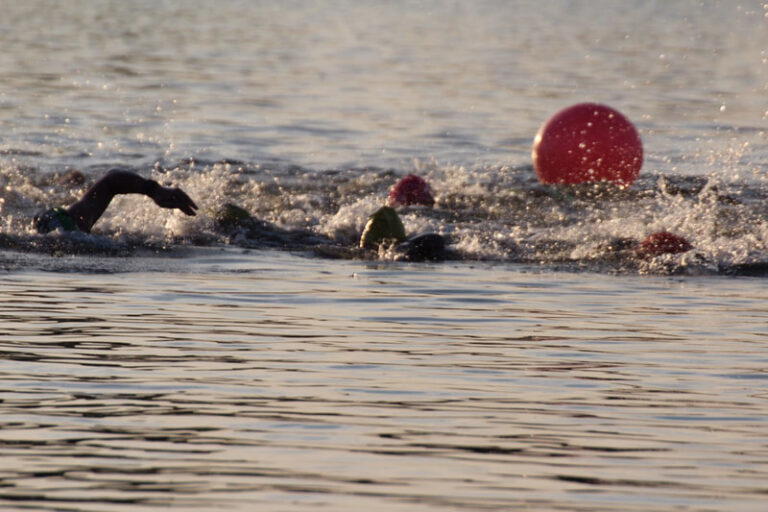
You may not see the bottom, the water may be cloudy, and you need to look ahead regularly to find the next buoy.
This unfamiliar environment can increase anxiety, especially if you haven’t practiced swimming in similar conditions.
Losing your breathing rhythm
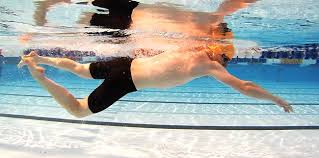
Freestyle swimming requires coordination between your arm movements, body rotation, and breathing.
When you become tense, your technique often changes.
You might lift your head too high, hold your breath underwater, or rush your breathing.
The result? You use more energy, your swimming becomes less efficient, and you may feel increasingly out of breath.
The 5 Most Common Reasons Triathletes Panic in Open Water
Understanding what’s happening is the first step toward improving it.
Here are five common reasons swimmers struggle during the opening minutes of a triathlon.
-
Starting too fast
Race-day adrenaline makes it tempting to swim at maximum effort from the beginning.
But swimming too fast increases your oxygen demand and makes it harder to establish a comfortable breathing pattern.
-
Holding your breath underwater
Some swimmers unconsciously hold their breath between inhalations.
Instead of continuously exhaling underwater, they wait until they turn their head to breathe.
This creates a rushed breathing pattern and can make every breath feel more difficult.
-
Lifting your head too high
When swimmers become nervous, they often lift their head forward to look around.
This can interrupt body position, increase resistance, and cause the legs to sink.
Your swimming becomes harder, requiring more energy for the same distance.
-
Feeling trapped in a crowd
Being surrounded by swimmers can create a feeling of losing control.
If someone touches your feet or swims very close to you, you may instinctively speed up or change direction.
-
Not practicing in open water
Swimming in a pool and swimming in a lake or ocean are different experiences.
Without regular open water practice, even a technically good swimmer may feel uncomfortable when visibility, temperature, waves, and other swimmers become part of the challenge.
What to Do When You Start Panicking During a Triathlon Swim
This is probably the most important part of this article.
What should you actually do when you feel breathless or panicked in the water?
First, remember this:
You don’t have to keep swimming forward when you’re struggling. Your safety is more important than your race time.
If you feel overwhelmed, stop trying to maintain your normal swimming pace.
Here are some practical steps.
Step 1: Stop and regain control
If you are able, stop swimming forward and roll onto your back to float.
If you are wearing a properly fitted wetsuit, it may provide additional buoyancy.
Keep your breathing as relaxed as possible and give yourself time to settle.
If floating on your back isn’t comfortable, use a supported upright position or hold onto a safety kayak or designated support point.
Step 2: Focus on your breathing
Try to avoid taking repeated, rushed breaths.
Instead, focus on gentle, controlled breathing.
Relax your shoulders and jaw. Allow yourself time to recover.
Do not force long breath holds or try to push through severe breathlessness.
Step 3: Get assistance if necessary
If you cannot regain control, feel unsafe, or experience significant breathing difficulty, signal for help.
Race safety personnel, lifeguards, and support kayaks are there to assist you.
Never feel embarrassed about asking for help or withdrawing from a race.
Step 4: Resume only when you feel safe
Once you’ve recovered and feel comfortable, you may continue if conditions allow and race officials permit it.
You can swim at a slower pace, take a wider line away from crowded swimmers, or use a backstroke or other comfortable swimming position if necessary.
The goal is to regain control, not to make up lost time.
How to Control Your Breathing During an Open Water Swim
Breathing technique is one of the most important foundations of efficient freestyle swimming.
Many swimmers focus on their arm movements, kicking, and swimming speed but underestimate how much their breathing affects the entire stroke.
Let’s look at three important principles.
Exhale continuously underwater
One of the most common freestyle breathing mistakes is holding your breath underwater.
Instead, try to exhale gently through your nose, mouth, or both while your face is in the water.
When you rotate your head to the side, you should be ready to inhale.
Think of it this way:
-
Face in the water: Exhale.
-
Turn your head to the side: Inhale.
-
Return your face to the water: Continue exhaling.
This creates a much more natural breathing rhythm.
Keep your head low when breathing
You don’t need to lift your entire head out of the water to take a breath.
Instead, rotate your head together with your body.
Keep one goggle in the water and the other just above the surface when conditions allow.
This helps maintain your body position and reduces unnecessary resistance.
Find a breathing rhythm that works for you
Some swimmers breathe every two strokes, while others breathe every three.
There isn’t one breathing pattern that works for everyone.
For triathlon swimming, the most important thing is finding a rhythm that allows you to breathe comfortably and consistently.
You can also practice breathing on both sides.
Bilateral breathing can improve your awareness of your surroundings and help you adapt to waves, sunlight, and other swimmers.
However, don’t force bilateral breathing during a race if it makes you uncomfortable or causes you to become breathless.
Comfortable breathing is more important than following a particular pattern.
Five Exercises to Build Confidence and Improve Your Breathing
You don’t have to wait until race day to work on your breathing.
In fact, the best time to improve your confidence is during regular training sessions.
Here are five exercises you can incorporate into your pool workouts.
Exercise 1: Relaxed Exhalation
Goal: Develop a natural breathing rhythm.
Stand in shallow water or hold the pool wall.
Put your face in the water and gently exhale bubbles.
Lift your head to inhale comfortably, then repeat.
Focus on relaxed, continuous exhalation rather than holding your breath.
Practice for 2–3 minutes.
Exercise 2: Side-Kick Breathing
Goal: Improve body rotation and breathing position.
Push off gently and swim on your side with one arm extended forward.
Keep your head in a natural position and practice rotating your head slightly to breathe.
Try to keep your body long and relaxed.
Switch sides.
Exercise 3: Slow Freestyle Swimming
Goal: Improve breathing coordination.
Swim short distances at an easy pace.
Focus on:
Relaxed shoulders.
Gentle exhalation underwater.
A comfortable breathing rhythm.
Smooth body rotation.
Avoid trying to swim fast.
The objective is to develop a comfortable and repeatable technique.
Exercise 4: Sight Swimming
Goal: Prepare for open water navigation.
During freestyle, practice briefly lifting your eyes forward to locate an imaginary buoy.
Try lifting your eyes first, then rotating your head to breathe.
Keep the movement small and avoid lifting your entire head out of the water.
Practice this in short intervals.
Exercise 5: Controlled Open Water Practice
Goal: Become familiar with the open water environment.
When possible, practice in an open water swimming area.
Start with short distances and familiar surroundings.
Gradually introduce different conditions, such as swimming without a pool wall, navigating toward a buoy, and swimming with other people nearby.
Always swim in designated safe areas, and use appropriate visibility equipment.
Never practice alone.
How to Prepare for a Crowded Triathlon Swim Start
A crowded swim start can be one of the most intimidating parts of a triathlon.
Fortunately, you can prepare for it.
Choose your starting position carefully
If you are not a particularly fast swimmer, you may feel more comfortable starting toward the side or back of the group.
This can give you more space and reduce the amount of physical contact with other swimmers.
Don’t feel pressured to position yourself at the front.
Your race is about completing the distance safely and comfortably.
Practice swimming close to other people
If possible, train with a group of swimmers.
Practice swimming alongside others and getting used to the occasional splash or change in direction.
Start with plenty of space and gradually become more comfortable.
Practice sighting
You need to know where you’re going.
In open water, practice looking forward briefly every few strokes to locate the next buoy.
This helps you avoid swimming unnecessarily long distances.
Start at a controlled pace
Don’t try to keep up with swimmers who are faster than you.
Give yourself time to establish your rhythm.
You can always increase your pace once you feel settled.
Familiarize yourself with the race environment
Before race day, check the swim course, water temperature, expected conditions, start format, and available safety support.
If possible, attend an organized practice swim at the race venue.
Knowing what to expect can make a significant difference.
Why Pool Swimming Doesn’t Always Prepare You for Open Water
You might be wondering why you can comfortably swim 1,500 meters in a pool but struggle during the opening minutes of a triathlon swim.
The answer is that pool swimming and open water swimming place different demands on your body and mind.
In a pool:
-
You have clear visibility.
-
You can see the bottom.
-
You have lane markings to guide you.
-
You can push off the wall regularly.
-
You generally swim without physical contact.
In open water:
-
You may have limited visibility.
-
You need to navigate toward buoys.
-
You have no wall to hold onto.
-
You may encounter waves, currents, or cold water.
-
You may swim close to dozens or hundreds of other athletes.
These differences require additional skills.
You need to develop confidence in your breathing, body position, navigation, and ability to adapt to changing conditions.
That’s why open water preparation should be part of your triathlon training.
But don’t overlook your basic swimming technique.
A relaxed, efficient freestyle stroke gives you a much better foundation for handling the additional challenges of open water.
Improve Your Freestyle Technique Before Your Next Triathlon
If you regularly feel breathless when swimming, it may be worth looking beyond your fitness level.
Your freestyle technique could be making swimming harder than it needs to be.
Small technical improvements can make a significant difference.
For example:
-
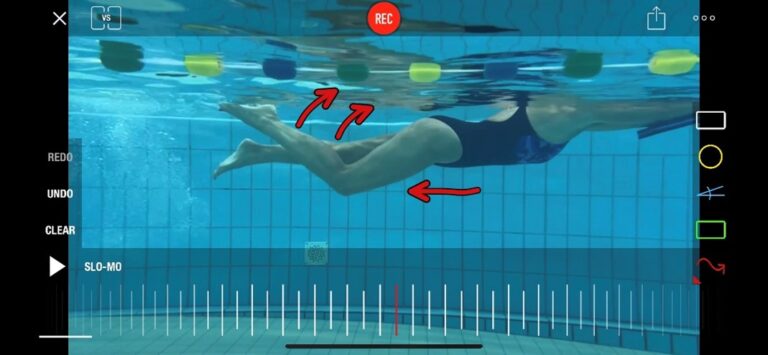
Better body position can reduce drag.
-
Improved breathing coordination can help you maintain a consistent rhythm.
-
More efficient arm movements can reduce unnecessary effort.
-
Better body rotation can make breathing easier.
You don’t necessarily need to swim harder or train more hours.
Sometimes, you need to swim more efficiently.
At Swimcourse Online, we help adult swimmers and triathletes improve their freestyle technique through structured online swimming courses.
Our courses focus on the fundamentals that make swimming more comfortable, efficient, and enjoyable.
Whether you want to improve your breathing, develop better freestyle technique, or build a stronger swimming foundation, the right technical guidance can help you move forward.
Explore our online swimming courses and start improving your freestyle technique today.
Discover the Swimcourse Online Courses
Final Thoughts: Confidence in Open Water Starts Before Race Day
Feeling breathless or panicked during the start of a triathlon swim can be a frightening experience.
But it doesn’t mean you’re a bad swimmer, and it doesn’t automatically mean you’re not fit enough to complete the distance.
Often, the challenge comes from a combination of breathing technique, race-day stress, unfamiliar conditions, and lack of open water experience.
The key is preparation.
Work on your freestyle breathing, develop a relaxed swimming technique, practice sighting, and gradually become familiar with open water conditions.
Don’t wait until race day to discover what makes you uncomfortable.
And remember: there’s no shame in slowing down, stopping, asking for assistance, or withdrawing if you don’t feel safe.
The goal isn’t simply to swim faster. It’s to become a more confident, relaxed, and efficient swimmer.
Your next triathlon swim can feel very different when you have the right skills and preparation.
Coach Frank Huisman: Swimcourse Online
Learn from an experienced swim coach.
Frank Huisman has been helping adult swimmers and triathletes improve their freestyle technique since 2008.


0 responses on "Breathless and Panicked at the Start of a Triathlon? Here's How to Stay Calm in Open Water"