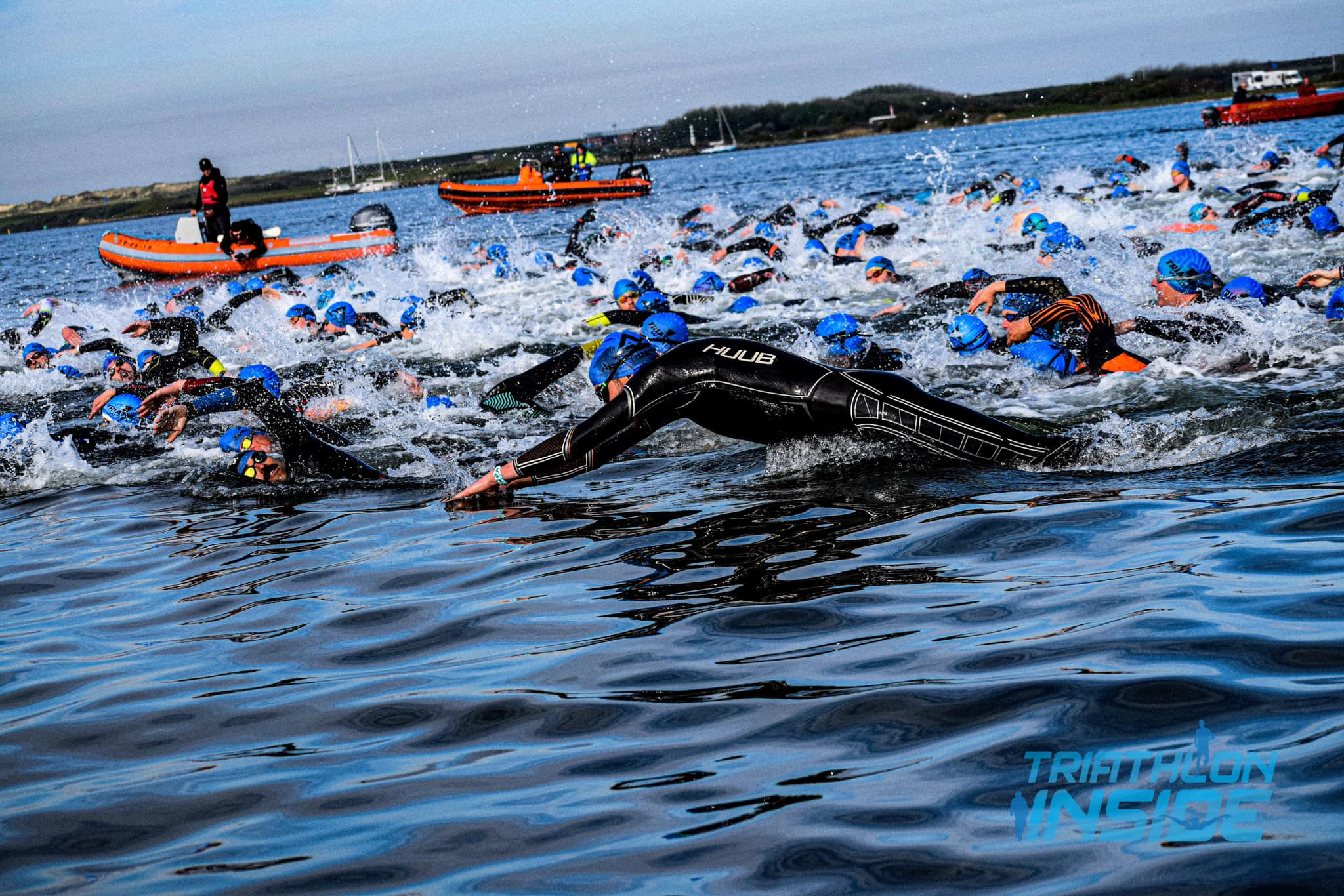
Transitioning from pool swimming to open water is one of the biggest challenges for triathletes. Swimming in a controlled indoor pool environment is completely different from racing in open water with waves, cold temperatures, wetsuits, navigation, and crowded starts.
A successful triathlon swim season does not start in open water. It starts months earlier with structured swim training focused on freestyle technique, swimming efficiency, stroke control, and endurance.
In this article, we explain how to build your swim training step by step from the indoor pool to open water swimming for triathlon season. For more tips and drills watch the Complete Swim Guide Open Water
Off Season (October to February): Build the Foundation in the Pool
The off season is the most important phase for improving freestyle swimming technique and building aerobic swimming fitness.
Indoor pool training provides the ideal environment:
- controlled conditions
- stable temperature
- minimal distractions
- full technical focus
This is where triathletes should develop the technical foundation that later transfers into open water performance.
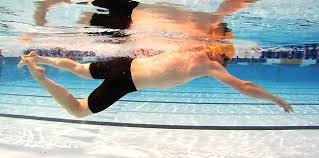
Focus on Freestyle Technique
During the winter months, the priority should be improving:
- body position and balance
- freestyle catch and pull efficiency
- breathing rhythm and relaxation
- stroke control under fatigue
Technique drills and controlled endurance swimming should form the core of your training.
At this stage:
quality is more important than volume.
Many triathletes make the mistake of swimming more meters instead of swimming more efficiently.
Tempo Intervals and Swimming Pace Control
Besides technique development, winter training should also focus on pace awareness and swimming control.
Important training elements:
- interval training with technical control
- consistent pacing over repeated intervals
- understanding the relationship between speed and effort
Triathletes should learn:
At what intensity does extra effort stop producing extra speed?
This awareness becomes essential during races and open water swimming.
CSS and Threshold Swim Training
CSS (Critical Swim Speed) training forms the backbone of performance-oriented swim training.
Typical CSS-focused sessions include:
- intervals around threshold pace
- aerobic endurance development
- technical consistency under fatigue
- interval variations from 50m to 400m
The goal is not simply to survive hard sessions, but to maintain efficient freestyle technique while swimming fast.
Important Note About CSS Testing
Traditional CSS testing is often inaccurate for beginner and intermediate swimmers.
Short-distance testing may not create enough pace difference because many developing swimmers lack the technical ability to produce meaningful speed changes over shorter efforts.
For beginner and intermediate triathletes, longer tests such as:
- a 1000m time trial
- or a 20-minute swim test
often provide a more realistic training threshold.
Transition Phase (March to April): Prepare for Open Water Swimming
During March and April, the focus gradually shifts from pure pool technique toward open water-specific swimming skills.
The technical foundation is already built.
Now training becomes more race-specific.
Stroke Rate Becomes the Key Metric
One of the most important adjustments for triathlon swimming is stroke rate.
Training focus:
- swimming at higher stroke rates
- linking pace and stroke frequency
- learning to switch between lower and higher frequencies
Why is this important?
Open water swimming usually involves:
- less glide
- more turbulence
- higher stress levels
- changing water conditions
Swimming in a wetsuit also changes body position and timing.
A slightly shorter stroke combined with a stable, higher stroke rate often creates:
- better control
- improved rhythm
- more efficiency in open water
Open Water Freestyle Technique
Pool swimming technique and open water freestyle technique are not always identical.
Open water swimming usually requires:
- a slightly shorter stroke
- higher arm tempo
- reduced glide phase
- a higher recovery arm position
The goal is not “perfect pool technique.”
The goal is functional efficiency under race conditions.
Interval Training for Open Water Preparation
Training sessions during this period should include:
- short high-intensity intervals
- longer efforts with stable stroke rate
- pace changes under fatigue
- technical adaptation under stress
At this stage, swimming must become adaptable rather than mechanically perfect.
Practicing Drafting and Race Starts
Many triathletes underestimate the importance of open water race skills.
These can already be trained in the pool:
- swimming closely behind others (drafting)
- overtaking swimmers
- group swimming dynamics
- fast starts
- buoy turn simulations
These skills often save more energy during races than pure swim fitness alone.
From May Onward: Move Into Open Water
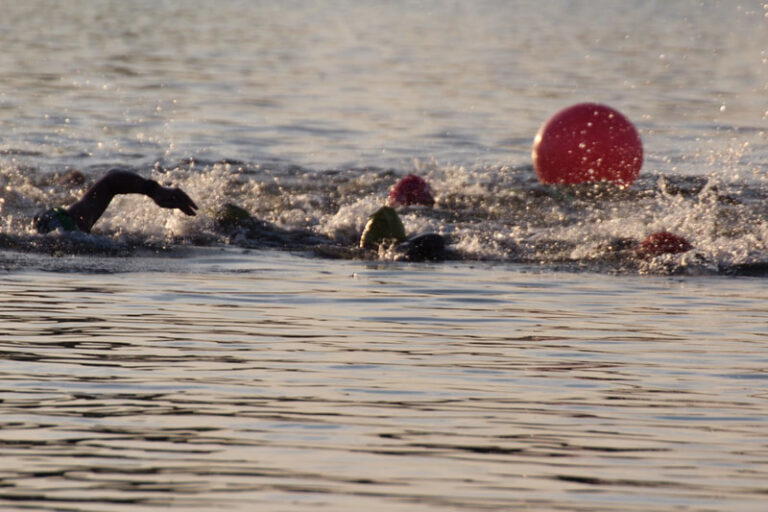
As triathlon season approaches, part of your swim training should move outdoors.
Ideally:
- 1 to 2 open water sessions per week
The exact approach depends heavily on water temperature and weather conditions.
Warm Spring Conditions: Start Earlier
During warmer springs, outdoor swim volume can increase earlier.
Training goals:
- continuous endurance swimming
- building from 2km toward 4–6km
- adapting to wetsuit swimming
- maintaining rhythm at higher stroke rates
Swimming continuously without pool walls creates a completely different physical and mental load.
Cold Water Swimming Adaptation
In colder conditions, open water swimming requires additional adaptation.
Important considerations:
- shorter sessions
- extra breathing control
- gradual temperature exposure
- maintaining relaxation under cold stress
Modern wetsuits and neoprene accessories make earlier season open water training much more accessible than before.
Swimming in a Wetsuit
Swimming in a wetsuit is a separate skill that should be trained regularly.
A wetsuit changes:
- body position
- buoyancy
- rotation
- shoulder mobility
- stroke timing
Most swimmers naturally shift toward:
- slightly higher stroke rates
- reduced kicking
- more upper-body-driven swimming
Triathletes who never train in a wetsuit are often surprised by how different race-day swimming feels.
Open Water Swimming Without a Wetsuit
Because summers are becoming warmer, many triathlons now feature non-wetsuit swims due to high water temperatures.
That is why triathletes should also train regularly without a wetsuit.
This prepares swimmers for:
- different body position
- altered stroke timing
- higher physical demand
- race-specific pacing
Essential Open Water Skills for Triathletes
Open water swimming is about more than speed.
Key race skills include:
- sighting and navigation
- drafting behind or beside swimmers
- buoy turns
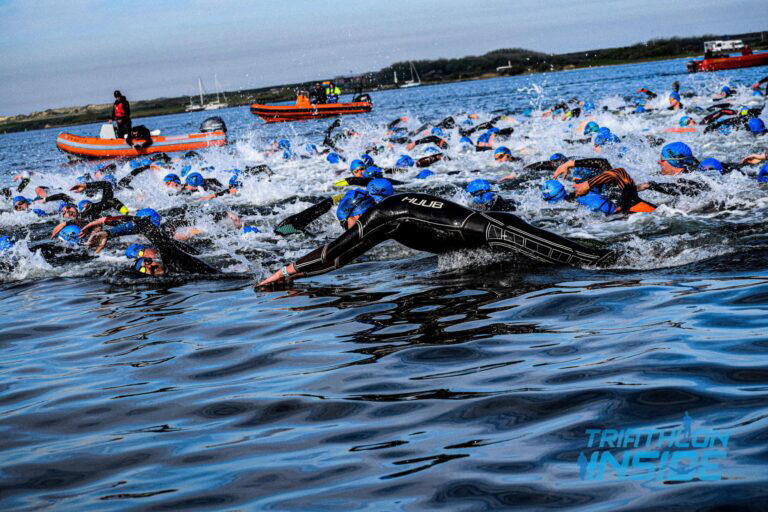
- beach starts and pontoon starts
- adapting breathing patterns to conditions
These skills often determine race performance more than raw swimming speed.
A Successful Swim Training Build-Up for Triathlon
A structured progression toward triathlon season follows a clear pattern:
Off Season
- freestyle technique
- swimming efficiency
- CSS and aerobic fitness
- pace control
Transition Phase
- stroke rate development
- race-specific intervals
- drafting and race skills
Race Season
- open water endurance
- wetsuit adaptation
- navigation and pacing
- tactical swimming skills
Triathletes who consciously train this progression enter open water with:
- more confidence
- better control
- improved efficiency
- and the ability to adapt to all race conditions.
Improve Your Freestyle Swimming Technique
Want to improve your freestyle swimming, body position, breathing, or open water performance?
Explore our structured freestyle swimming courses at Swimcourse.online:
- Freestyle Foundations
- Freestyle Technique Control
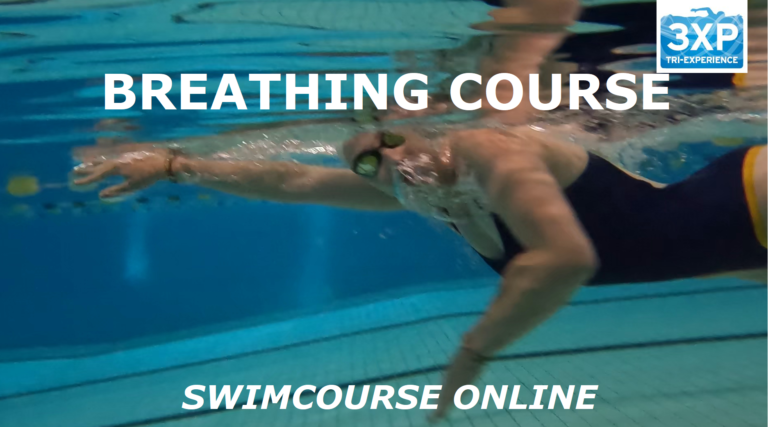
- Breathing Course
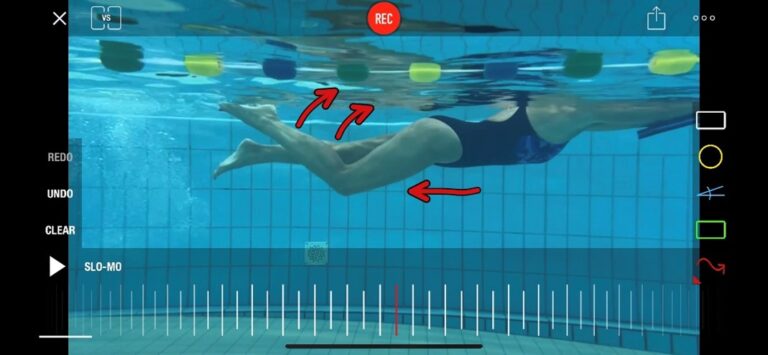
- Kicking & Body Position
- Advanced Freestyle Performance
- Online Video Analysis
Article written by Frank Huisman coache of Tri-Experience — specialists in freestyle swimming and triathlon swim training for over 17 years.


0 responses on "Triathlon Swim Training: From Pool Swimming to Open Water"